Getting new dentures is a big step. It's totally normal to feel both relieved and a bit unsure before you start wearing them. Maybe your dentist just told you it's time for dentures after years of dental issues, or maybe you're swapping out an old set that just doesn't fit right anymore.
Either way, it's understandable if you have questions racing through your mind: Are they going to feel weird? Will eating ever feel normal again? How long does it take before they just feel like part of your mouth?
The good news is that the uncertain feeling is temporary and well understood. Dentures have a real adjustment curve, and knowing the shape of it, what is normal in week one versus what actually needs a call to your dentist, takes most of the worry out of the first month.
So, what should you expect with new dentures? This guide covers everything from your initial consultation and fitting appointments to the adjustment period, tips for eating and speaking, daily care routines, and knowing when it's time for a refit.
Whether you're thinking about dentures for yourself or helping someone else through it, you'll find answers to your real concerns here.
What to Expect With New Dentures in the First Few Weeks
Most people notice their new dentures feel bulky, unfamiliar, and a little awkward at first. That sensation is normal. As your mouth, tongue, and cheek muscles get used to the new shape, that odd feeling fades.
How Long Getting Used to Dentures Usually Takes
Adjusting to new dentures takes time, and your dentist will probably tell you that right away. For most patients, the first two to four weeks are the toughest. Your gums need a while to get used to the pressure of a new appliance sitting on them for hours every day.
By the end of the first month, chewing and speaking should start to feel easier. Most people find full comfort comes around six to eight weeks, but every mouth is different. If you wear your dentures consistently during this time, your muscles will adapt faster.
Some days will feel better than others. Progress isn't always steady, and that's totally normal.
Common Early Changes in Speech, Saliva, and Soreness
During the first week, your mouth might make more saliva than usual. Your body is just reacting to something new in your mouth. The extra saliva usually settles down within a few days as your mouth gets used to things.
Speech changes happen a lot, too. Words with "s" and "th" sounds might come out funny at first. Try reading aloud for ten or fifteen minutes a day. Your tongue will figure out how to work around the denture with a little practice.
It's common for your gums to feel a bit sore, especially where the denture base touches tissue that hasn't had to support anything before. A warm saltwater rinse can help soothe irritation while your gums toughen up.
Signs Your Fit May Need an Adjustment
Not every discomfort is just part of getting used to dentures. If you get a sore spot that sticks around for more than a few days, or if your denture rocks when you chew, you should call your dentist. Those are signs the fit needs a professional tweak.
Watch out for these issues:
Sharp or burning pain in one area of your gums
Redness or ulceration under the denture base
Clicking sounds when you talk or eat
The denture lifts or shifts when you open your mouth wide
You struggle to keep the denture in place without a lot of effort
Your dentist will usually want to see you for a couple of follow-up visits in the early weeks. These adjustments are just part of the process, not a sign that anything's gone wrong. Knowing what to expect from start to finish can make these visits feel less stressful.
How the Denture Process Usually Works
Getting dentures usually takes a few appointments over several weeks. Each visit builds on the last, so you end up with a denture that fits your mouth as closely as possible.
Consultation, Exam, and Treatment Planning
Your first visit is all about a thorough exam of your gums, jawbone, and any teeth you still have. An X-ray of the jaw helps your dentist check bone density and root health under the surface. This information helps decide if you need full dentures, partial dentures, or maybe a different restorative treatment.
At this appointment, your dentist will also talk about your health history, medications, and any worries about comfort or cost. If you have PPO dental insurance, the front desk can review your coverage and explain affordable financing options before you make any decisions.
If you're nervous about dental work, now's a good time to mention it. Offices that offer calming options can make longer appointments a lot easier.
Impressions, Measurements, and Try-In Visits
Once you agree on a treatment plan, your next appointments focus on getting detailed impressions of your mouth. Your dentist uses these to make a mold that matches the exact shape of your gums and palate.
Digital impressions can help skip the mess and gagging that old-school putty methods sometimes caused.
Bite measurements show how your upper and lower jaws fit together. These help make sure your denture supports a natural, comfortable bite. A wax try-in step helps optimize the fit and look of the final denture before it is finished for good.
During a try-in visit, you wear a wax version of your denture so you and your dentist can check the tooth shade, shape, and alignment. If something feels or looks off, speak up. It's way easier to make changes now than after the final denture is made.
Final Placement, Follow-Ups, and Fit Checks
On placement day, your dentist puts in the finished denture and checks your bite from different angles. They'll ask you to open, close, and move your jaw side to side. If any spots press too hard, your dentist smooths them out with a small rotary tool.
Expect to come back for at least one follow-up appointment in the first week or two. Your dentist might mark sore spots with a special paste to see exactly where the denture needs trimming. These quick visits really help with day-to-day comfort.
Over time, your bone and gum tissue change shape, so you'll need periodic fit checks as part of your long-term care. Knowing which type of denture you're getting can help you see why each step matters.
Choosing the Right Type for Your Smile
The type of denture you get depends on how many teeth you're replacing and how healthy your gums and jawbone are. Your dentist looks at both function and appearance before making a recommendation.
Full Dentures for Complete Tooth Loss
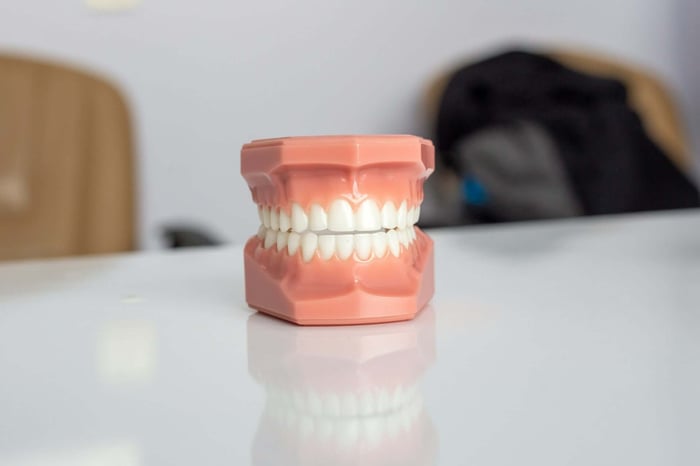
Full dentures replace a whole arch of teeth, either upper, lower, or both. The base is made from gum-colored acrylic and sits right on your ridges. An upper full denture also covers the palate, which helps with suction and keeps things stable.
If you need teeth pulled first, your dentist might suggest immediate dentures. These go in the same day as extractions, so you're never without teeth. An immediate denture works as a temporary while your gums heal, and a permanent set gets made after the tissue settles down, usually a few months later.
Full dentures bring back your ability to chew, restore your facial structure, and help with speech changes that happen when teeth are missing. Research on dentures and chewing shows complete dentures can measurably improve chewing for people who have been without teeth.
Partial Dentures When Some Natural Teeth Remain
Partial dentures fill in gaps when you still have healthy teeth. They attach to your remaining teeth with small clasps or precision attachments and come out for cleaning. A partial keeps your natural teeth from shifting into empty spaces.
Materials range from sturdy acrylic frameworks to flexible nylon bases. Flexible partials usually feel lighter and blend in better with your gums. Your dentist might also talk about fixed dental bridges as a permanent alternative if you have strong anchor teeth on both sides of the gap.
It's even more important to keep your remaining natural teeth healthy once you have a partial. Regular periodontal care protects the teeth and bone that support your partial denture.
How Your Dentist Recommends the Best Option
Your dentist looks at several things: how many teeth are missing, where they're missing, bone density, gum health, your budget, and your lifestyle. Here's a table that compares the main types of dentures side by side.
Feature | Full Dentures | Partial Dentures |
|---|---|---|
Best for | Complete tooth loss in one or both arches | One or more missing teeth with healthy teeth remaining |
How it stays in place | Suction, gravity, or adhesive | Clasps or attachments on natural teeth |
Removable | Yes | Yes |
Preserves remaining teeth | Not applicable | Yes, prevents shifting |
Typical adjustment period | 4 to 8 weeks | 2 to 4 weeks |
May require extractions first | Often | Sometimes |
Your dentist might also bring up dental implants to support your denture for extra stability. That usually comes up during your first consultation. Once you know which type fits your needs, you'll probably want to know how to eat and speak comfortably right away.
Eating and Speaking More Comfortably
Your first meals with new dentures will feel different, and that's okay. The trick is to start slow and build up your confidence.
Best Foods to Start With
Soft, easy-to-chew foods make the first week way easier. Think scrambled eggs, mashed potatoes, yogurt, cooked veggies, and soft pasta. These foods don't need much biting force and are less likely to knock your denture loose during meals.
Cut everything into small, bite-sized pieces for the first couple of weeks. Try to chew on both sides of your mouth so the denture stays balanced. If you chew on just one side, the denture might tip and cause sore spots.
Skip sticky foods like caramel and peanut butter while you're still adjusting. Hard foods like raw carrots, nuts, and crusty bread can wait until you feel more comfortable.
Simple Tips for Eating with Dentures
Getting comfortable eating with dentures takes some practice, but these habits really help:
Take smaller bites than you normally would
Chew slowly, using both sides of your mouth at once
Sip water during meals to help food move and keep your mouth comfortable
Use a denture adhesive if your dentist suggests it for extra hold
Skip biting straight into food with your front teeth; use your side teeth instead
As your mouth muscles get stronger, try adding firmer foods back in. Most people say eating with dentures starts to feel normal in about four to six weeks, though foods like corn on the cob might always need a little creativity.
Watch out for hot foods and drinks: dentures insulate your palate, so you can’t always tell when something’s too hot. Protecting the soft tissue in your mouth from burns is part of the adjustment, too.
How to Practice Clearer Speech at Home
Reading out loud works well for retraining your tongue and lips. Grab a book, a magazine, or even a recipe and read away. Pay extra attention to words with "s," "f," and "th" sounds, since those tend to be tricky.
Singing along to your favorite music is another fun, low-pressure way to help your mouth adjust. The big mouth movements you use when singing can help your muscles get used to the shape of your dentures faster than just talking would.
If a certain word keeps tripping you up, say it slowly a few times in a row. Your tongue is finding a new resting spot, and repetition helps. Once eating and speaking start to feel easier, you can focus on the daily habits that keep your dentures in good shape.
Daily Care Habits That Protect Comfort and Fit
Sticking to a cleaning routine keeps your dentures looking natural and your gums healthy. Good habits also help your dentures last longer and cut down on trips for adjustments.
How to Clean Dentures Each Day
Take your dentures out after meals and rinse them under running water to clear off food. Once a day, scrub all surfaces, especially the parts that touch your gums, with a soft-bristled denture brush and a non-abrasive denture cleaner.
Regular toothpaste is too rough for denture acrylic and can leave tiny scratches where bacteria hide. Stick to cleaners made for dentures. Guidance on cleaning dentures suggests doing it over a folded towel or a sink with a few inches of water, just in case you drop them.
Don’t forget to brush your gums, tongue, and palate with a soft toothbrush each morning before putting your dentures in. This boosts circulation and gets rid of plaque on tissue that’s covered most of the day. If you still have natural teeth, regular professional gum cleanings help protect the foundation your partial denture needs.
When Denture Adhesive May Help
You might not always need denture adhesive, but it can boost your confidence in the early weeks while your gums are still getting used to things. A thin, even layer on the tissue side of the denture creates a light seal and helps keep things steady while you eat and talk.
If you notice you’re using more adhesive over time, that usually means your denture doesn’t fit well anymore, not that you need a stronger product. Ask your dentist to check the fit and see if a reline or a new denture makes sense.
Adhesives come as creams, powders, and adhesive strips. Your dentist can help you pick the one that fits your denture and your preferences best.
Storing Dentures and Resting Your Gums Overnight
Your gums need a break from the constant pressure of your dentures. Take them out at night to let blood flow return to the tissue and lower your risk of fungal infections like oral thrush, a common tip in oral health guidance.
Drop your dentures in a container of fresh water or a denture-soaking solution overnight. Never let them dry out. If acrylic dries out, it can warp, and then your denture just won’t fit right in the morning.
Keep your soaking container somewhere safe, away from pets and kids. A steady nighttime routine protects both your dentures and your mouth. Daily care keeps you ahead of problems before they start.
Moving Forward with Confidence
Knowing what to expect with new dentures puts you in control. Good preparation and a supportive dental team can make the transition much smoother than you might think.
Questions to Bring to Your Consultation
Showing up with a short list of questions helps you get more out of your first appointment. You don’t need fancy dental terms. Simple, honest questions help your dentist tailor your care to you.
Ask about the timeline from first impression to final placement. Check if immediate dentures are an option if you need extractions. Find out how many follow-up visits are included and what adjustment appointments cost.
If you’re worried about the price, ask about payment plans and insurance before you start, which can make dentures more affordable than you expect. Knowing your options ahead of time takes a lot of stress out of the process.
When to Call for Help or a Refit
Some issues work themselves out in the first few weeks, but others need your dentist’s attention. Knowing when to call saves you a lot of discomfort.
Contact your dentist if you notice:
A sore that doesn’t get better after two or three days
Constant clicking or rocking when you chew
Your bite feels off, like one side is higher than the other
You need more and more adhesive to keep your denture in place
Any sign of infection: swelling, redness, or a strange odor
Your bone and gums change shape over time. Even a well-fitting denture might need a reline or replacement after five to seven years. Regular dental checkups help catch these changes early.
Next Steps if You Are Ready to Explore Treatment
Taking the next step doesn’t have to be overwhelming. If you’ve been putting off the conversation about dentures, even a quick consultation can answer the questions that have been nagging at you.
Curious about what’s right for you? Call Dr. Hamid at El Segundo Modern Dentistry & Orthodontics at (424) 277-2671 and book a comfortable, no-pressure consultation to talk through the denture process at your own pace.
Not sure where to start? Ask for a same-day visit, or schedule an appointment online whenever you are ready, and bring every question you have about living with a new set.
Frequently Asked Questions
How long does it usually take to feel comfortable wearing dentures all day?
Most people feel noticeably more comfortable after two to four weeks. For many, it takes about six to eight weeks to reach the point where you barely notice your dentures during daily life. Wearing them all day helps speed things up.
What should I do if my new dentures are rubbing or causing sore spots?
A little irritation in the first few days is pretty normal. If a sore spot sticks around longer than two or three days, your dentist should check it. A quick adjustment visit can smooth out the rough area. Don’t try to trim or file your denture at home, since you could ruin the fit.
How can I reduce gagging and get used to the feeling of dentures in my mouth?
Gagging is pretty common, especially with upper dentures that cover the palate. Try breathing slowly through your nose, sucking on a mint, or sipping water if the urge comes up. Most people find the gagging fades within a week as your brain gets used to the new shape.
When should I schedule an adjustment visit if my bite feels uneven or my dentures feel loose?
Call your dentist within a few days if your bite feels off or your denture moves a lot when you chew or speak. Early adjustments are quick and simple. Waiting too long can cause sore spots or uneven wear on your denture.